No following? No equipment? No experience? None of that matters. Here is the honest, step-by-step guide to becoming a paid UGC creator in the UK in 2026.
A few years ago, becoming a content creator meant building an audience first. You needed thousands of followers before any brand would take you seriously. You needed to post consistently for months, grow an engaged community, and hope that at some point a brand would reach out with a paid opportunity.
That model still exists. But there is now a completely different path, one where your follower count is completely irrelevant, and that path is becoming a UGC creator. Right now, in 2026, it is one of the most accessible ways to earn money from content without needing an audience at all.
Step 1 - Understand what brands actually want
When a brand puts out a UGC brief, they are looking for something very specific: content that looks organic, filmed casually on a phone, with natural lighting, in a real environment. They want a delivery that sounds like a genuine recommendation from a real person, not a polished read from a script.
The formats that come up most often are testimonials, unboxing videos, before-and-after content, and problem-solution videos. What brands are specifically trying to avoid is content that looks produced. Over-edited videos with fancy transitions, studio lighting that is too perfect, or a delivery that sounds like someone reading a teleprompter, all of these reduce the authenticity that makes UGC work in the first place. The whole point is that it should not look like an ad.
Step 2 - Set up your filming space without spending money
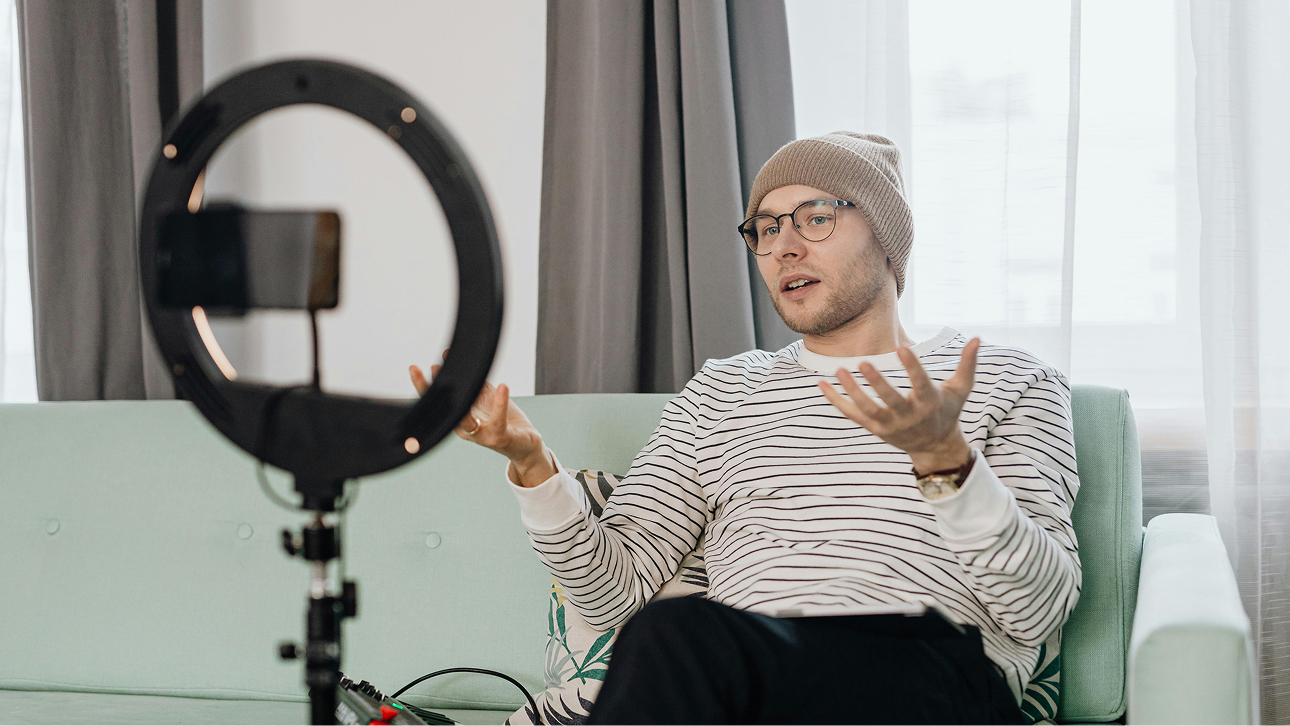
You genuinely do not need much to get started. The basics are decent natural light and clear audio. Everything else is secondary.
For lighting, position yourself facing a window. Natural light is flattering, free, and looks far more authentic than artificial lighting. If you are filming in the evening, a simple ring light costing around £20 to £30 is sufficient. For audio, the built-in microphone on any modern smartphone is good enough for most UGC briefs. The only disadvantage is background noise ruining your audio, so turn off the TV, close the window if there is traffic, and wait until the house is quiet. For your background, keep it simple: a plain wall, a tidy bookshelf, or a clean kitchen counter all work well.
Step 3 - Build a portfolio before you apply to anything
The single biggest mistake beginners make is signing up to creator platforms without any sample content to show. Brands reviewing applications on Influee or Billo look at your portfolio before they look at anything else. If your portfolio is empty, you will not get selected regardless of how good your written pitch is.
Before applying to a single brief, create 3 to 5 sample videos using products you already use. Pick things you genuinely like, a skincare product, a piece of tech, a food supplement, or a household item. Film a 30 to 60-second UGC-style video for each one. Be honest, be conversational, and focus on making the opening hook as strong as possible. These videos do not need to be perfect. They just need to show that you can speak naturally on camera, that your audio and lighting are acceptable, and that you understand the UGC format.
Step 4 - Join the platforms where brands are actively looking
The most efficient way to find paid UGC work as a beginner is through platforms that connect creators directly with brands. These platforms handle payments, contracts, and communication, so you can focus entirely on creating.
Influee is the largest UGC platform in the UK market. Brands post briefs with clear requirements, timelines, and budgets. As a creator, you browse available briefs and apply to the ones that match your content style. Billo is focused specifically on short-form video ads and is particularly popular with e-commerce brands running Meta campaigns.
Fiverr works differently, instead of applying to briefs, you create a gig page offering UGC video creation services and wait for brands to come to you. Direct outreach on Instagram and TikTok is also underused and surprisingly effective. Find small brands in categories you already know well and send a short, personalised message.
Step 5 - Price your work correctly from the very beginning
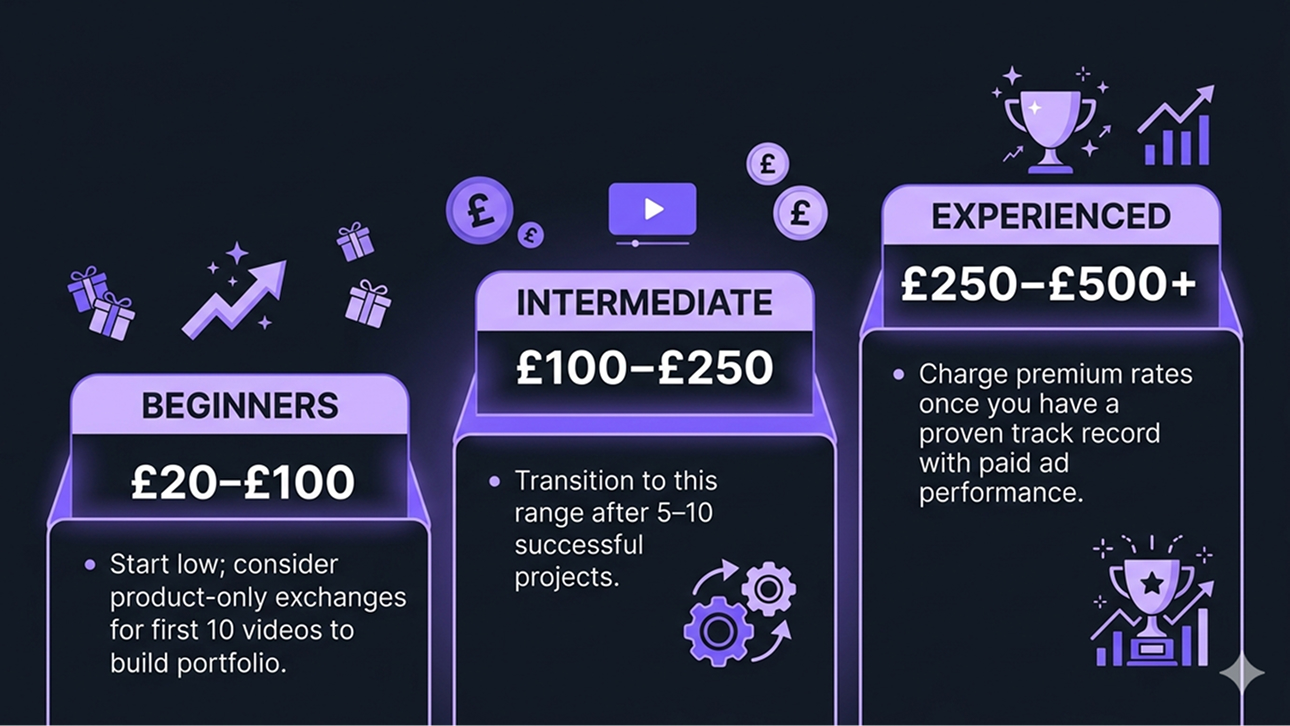
Pricing is where most new UGC creators get it wrong, usually by undercharging significantly. Here is the current UK market reality in 2026.
If you are just starting out with no portfolio and no track record, £20 to £100 per video is the right starting range. At the lower end, consider offering your first 10 videos in exchange for the products themselves rather than cash payment. This builds your portfolio with real products, gives you genuine experience reviewing things you have actually used, and removes the awkward pricing negotiation before you have anything to show for your work. Once you have 5 to 10 completed paid or product-exchange projects, move into the £100 to £250 range. Experienced creators with a track record of producing content that performs in paid ads typically charge £250 to £500 or more per video.
One important clarification: these rates apply when you are delivering raw video files to the brand for use in their own paid ads. If a brand wants you to post the content on your own channel to your own followers, that is a completely different proposition and should be priced based on your reach and engagement, not just your production skills.
No followers? No gear? No experience? None of that matters. Here's your straightforward, step-by-step guide to becoming a paid UGC creator in the UK by 2026.
Step 6 - Improve with every single project
The creators who move from charging £75 to charging £350 per video are not necessarily the most naturally talented. They are the ones who treat every project as something to learn from and improve faster than everyone else.
After every delivery, ask one simple question: 'Is there anything you would have liked done differently?' Most clients will not volunteer this feedback unless you ask directly. The ones who do are essentially offering you free coaching on exactly what brands want.
Beyond client feedback, watch your own videos back with a genuinely critical eye. Notice where your delivery slows down, where you sound like you are reading rather than talking, where your energy drops. Pick one specific thing to improve on the next video. Consistent, incremental improvement is what separates the creators earning £100 a month from the ones earning £3,000 a month.
Case Study: Holly Rome, Manchester
Holly Rome was working in a marketing agency in Manchester when she started exploring UGC creation in early 2022. She had around 400 Instagram followers, no video production experience, and was filming on an iPhone 11. She was not an influencer and had no plans to become one.
Her first three videos were made for free in exchange for the products, a supplement brand, a home organiser, and a skincare serum. She used those three videos as her portfolio and signed up to Influee and Billo the same week. Within six weeks she had completed her first two paid briefs at £75 per video. By month four she had raised her rate to £150. By month eight she was charging £350 per video and had worked with brands including Oral-B and a UK skincare brand.
She credits two things for her progress: always asking for feedback after every delivery, and being ruthless about improving her opening hook on every video she made.
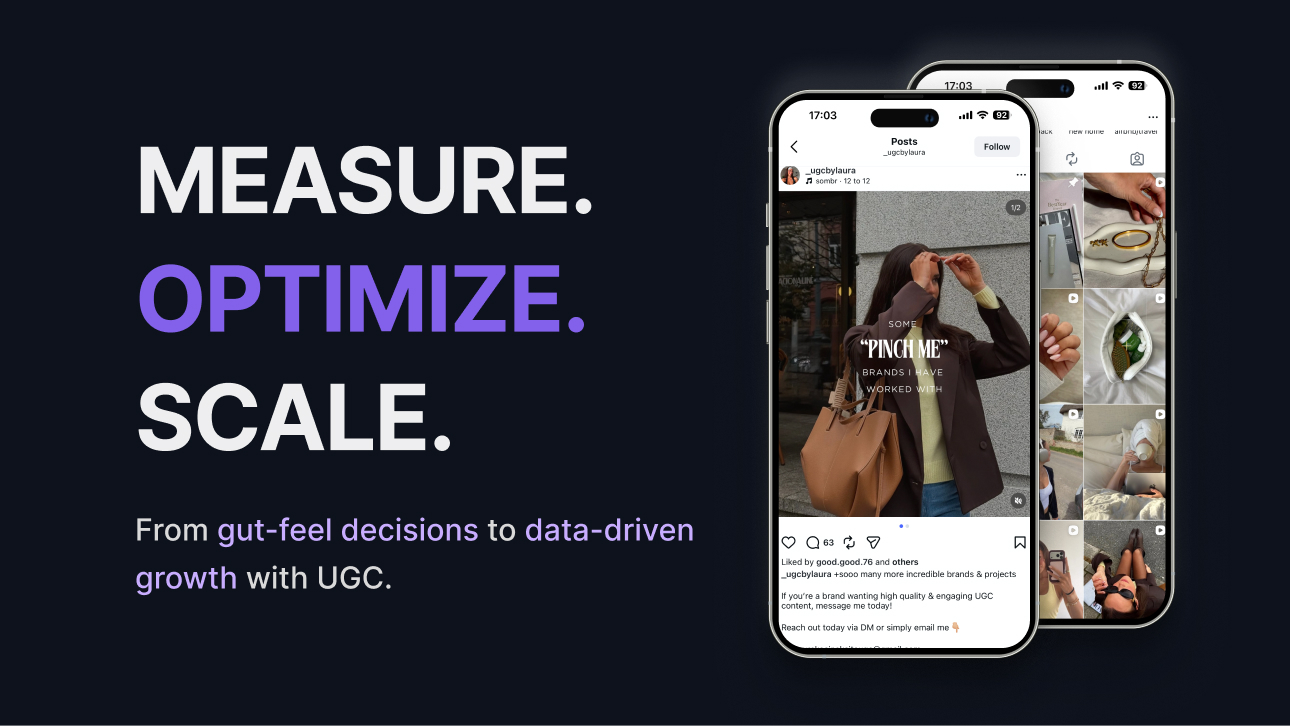
TikTok search results for "ugc video": real UGC content from creators filming products in everyday settings. Source: TikTok (search: ugc video)